New challenges are faced by parents with children and artificial intelligence due to the widespread adoption of AI technologies in schools,
which are no longer limited to technical and professional fields relied upon by professionals and business owners only.
It has also extended to include children through interactive games, educational robots, and the variety of AI in schools specifically designed for them.
In light of this expansion, it has become necessary for parents to Teaching kids AI About the technologies of artificial intelligence.
the aim of expanding their awareness, developing their mental abilities, and preparing them to deal with a future that heavily relies on these technologies.
For this reason, it is now time for parents to embrace artificial intelligence for children and guide their kids toward a smarter and safer future.
Why Parents Should Prioritize AI Education for Children
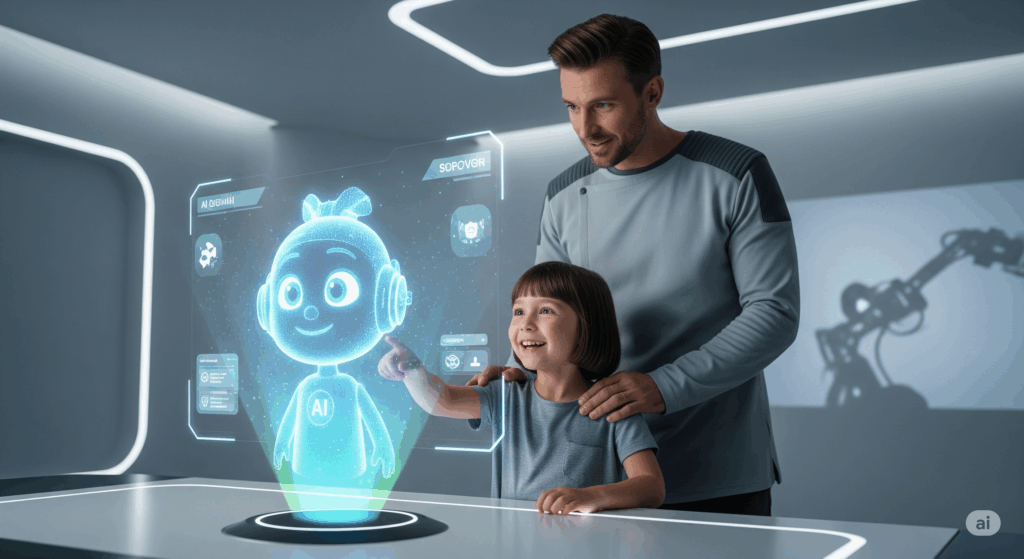
AI Education for Children
- Some parents fear using artificial intelligence because they believe it might use their data in illegal ways, and they don’t feel obligated to deal with it now.
But the future imposes a different reality on the next generation artificial intelligence will be imposed on them
whether at school, during play, or even in recreational activities.
- children’s They will find AI to be an essential part of their environment. Therefore, teaching AI tools to children enables Helps foster innovation and creativity,
opening the door to a child’s imagination to choose the right AI tool and develop smarter solutions to problems. So the child should to know what to search for and what not to search for,
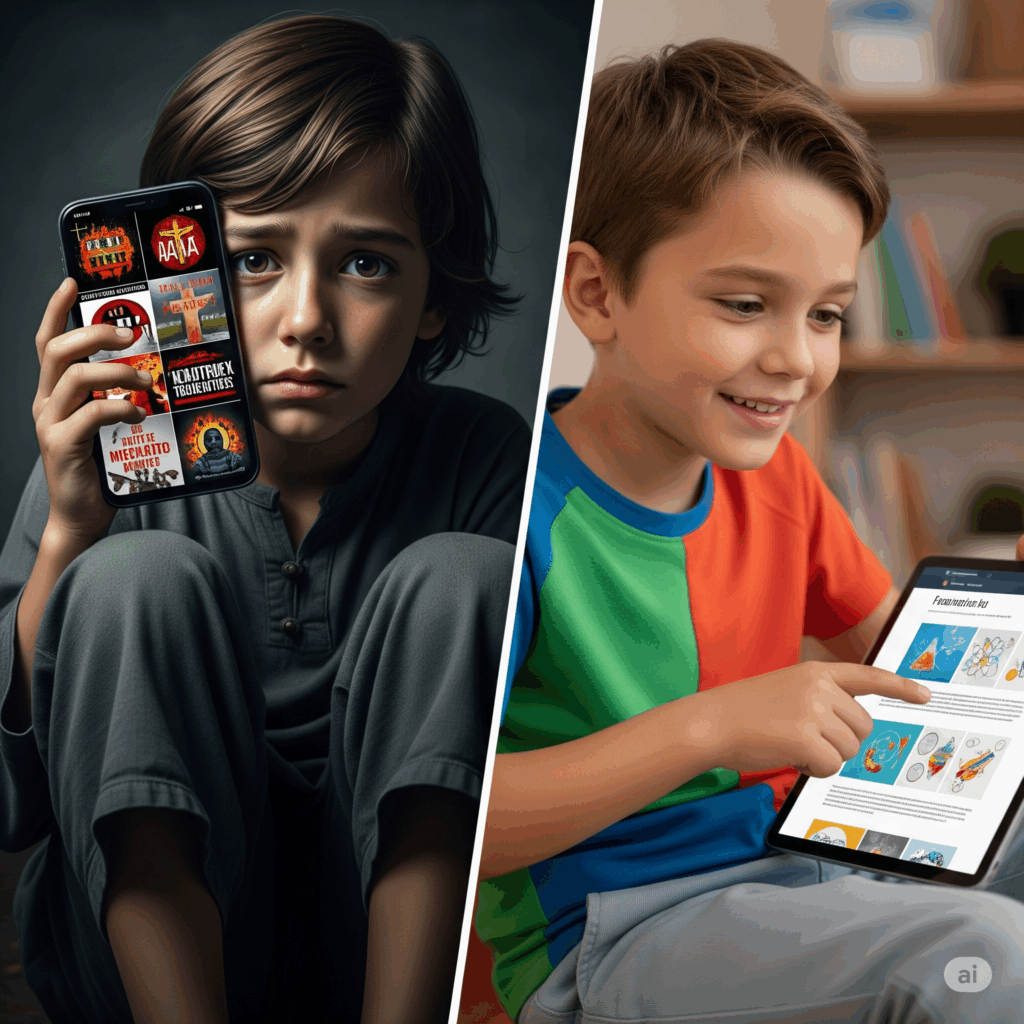
- Therefore, artificial intelligence courses for children help protect them from misleading or sensitive information that may not be appropriate for their age or cognitive level.
This misinformation is due to general AI generating content that is inaccurate or not age-appropriate.
For example,
A child may ask a question like: “How do I unlock my dad’s phone without the password?”
The intention might be curiosity, but the answer could teach them manipulation or spying.
Harvard Research on the Importance of Teaching kids AI
- The researcher and assistant professor at the Graduate School of Education at Harvard University, Ying Xu,
- confirms the necessity of digital literacy for children and guiding them to use AI tools appropriate for children, which benefit their growth and learning.
- What is meant by AI tools for children are those that are specially designed and restricted to guide them on the right path and avoid misconceptions.
How do children use artificial intelligence?
- why It is essential to prepare children to deal with AI tools and understand them consciously, in a way that helps them use AI positively?
1- to face any challenges or risks that may arise while using this technology.
2- As a result The more knowledge they gain, the more capable
3- they become of interacting with technological developments confidently and competently without being surprised by changes they are not prepared for.
4- The goal of teaching children artificial intelligence is to help them write queries politely and reduce inappropriate content.
5- in contrast train the child to think critically to make him wonder with himself, is this suitable for my age or does someone older than me need to be sure.
The Best Ai education for children courses
To make your choice precise and suitable for a strong platform capable of benefiting your child and connecting with their mindset, .
You should helping them distinguish between human interaction and interaction with technology
As well as the impact of both on a child’s mental and behavioral development is not easy.
Therefore, I will share with you the most important topics that should be discussed with your child during the course. AI courses for children: A Guide for Parent
- When to consult adults when encountering misleading or age-inappropriate content.
- Differentiating between human interaction and machine (technology) interaction.
- Providing restricted AI tools for children to block any bias or potential harm.
- How to ask questions or conduct research to produce specific responses that satisfy the child’s interests.
- Analyzing AI responses meaning they should not believe all results blindly.
- Respecting others’ privacy and not posting any photos or information about them.
And beyond that, Teaching kids AI doesn’t have to be overwhelming — and you don’t have to do it alone. “Mohtawa Space” is here to support you in this journey by offering reliable, child-friendly .
your child will learn all these elements and important guidelines That we’ve talked to you before with a professional expert
who has over 10 years of experience in training and guidance through a course offered on the Mohtawa Space platform with 50% off when subscribing to the AI for Children course.
Course link
